Why Production Changeovers Put Extra Pressure on Food Facility Floors
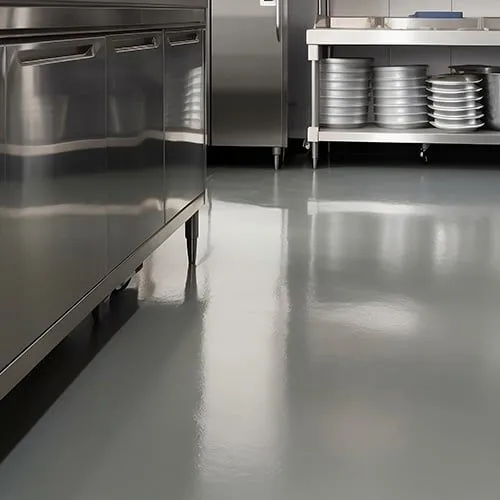
Food facilities do not always produce the same product continuously. A production line may switch recipes, ingredients, packaging formats, or product categories several times during a week. Each changeover can involve equipment movement, intensive cleaning, rinsing, sanitizing, inspection, and preparation before the next run begins. These activities place additional demands on the floor beyond ordinary production traffic. Flooring should therefore be planned not only around what happens during manufacturing, but also around what happens when one production cycle ends and another begins.
Changeovers Intensify Cleaning
Routine cleaning already exposes food-facility floors to water, detergents, and repeated scrubbing. A full production changeover can be more intensive because equipment, work zones, and surrounding surfaces may need deeper sanitation.
More water may reach the floor, cleaning chemicals may remain in contact longer, and employees can make repeated passes with hoses, scrubbers, and carts.
Managers evaluating Food And Beverage Flooring Services In Nj should describe these changeover routines when discussing flooring requirements. The most demanding sanitation cycle may be more useful for system selection than an average production day.
Equipment Movement Exposes New Areas
Mobile tables, racks, bins, carts, and processing equipment may be repositioned between product runs. Sections of floor normally protected beneath equipment can suddenly become part of an active cleaning zone.
These hidden areas may reveal staining, cracks, damaged coatings, or accumulated residue. If the concrete is deteriorating around wheels or equipment bases, repeated movement can worsen the problem.
Regular inspection during changeovers gives maintenance teams an opportunity to find these issues before equipment returns to its normal position.
Water Flow Becomes More Visible
Heavy sanitation can expose drainage weaknesses that are less obvious during ordinary operations. Water may collect behind equipment, near wall edges, around drains, or in shallow depressions.
Staff should observe which locations take the longest to dry after a complete changeover. Those patterns can identify low spots or drainage routes that deserve attention during future renovation.
A resinous surface can improve continuity, but significant slope problems still need to be corrected in the substrate rather than expected to disappear beneath a coating.
Texture Has to Support Deep Cleaning
Slip-resistant texture is useful in wet food environments, but changeover cleaning can reveal the maintenance cost of an overly aggressive surface.
Deep texture may hold food particles or cleaning residue and require more brushing. A surface that is too smooth, however, may not provide enough traction in frequently washed areas.
Facilities researching Epoxy Flooring For Kitchen In Usa should evaluate traction together with sanitation effort. Cooking, washing, preparation, and dry-storage zones may each justify different surface profiles.
Chemicals Should Match the Flooring System
Changeovers can involve detergents, degreasers, sanitizers, and other cleaning products used more intensively than during ordinary maintenance.
Facility managers should document the chemicals normally used, their concentrations, and whether warm or hot water is part of the cleaning process. Different resinous systems and topcoats can respond differently to repeated chemical and thermal exposure.
Flooring selection should therefore reflect real sanitation practices rather than assuming mild cleaning conditions.
Joints and Edges Become Vulnerable
Intensive washdowns often direct water toward drains, walls, equipment bases, and room transitions. These are also locations where cracks, failed sealants, or damaged joints can develop.
If liquids repeatedly reach an open defect, the concrete beneath the floor may become harder to maintain. During changeovers, maintenance teams should inspect drain surrounds, thresholds, wall edges, and previously repaired areas.
Small defects are easier to address before repeated sanitation and traffic enlarge them.
Visual Zoning Can Support Changeovers
Some food facilities separate production activities by room, process, or sanitation zone. Flooring color or markings can help employees recognize boundaries when equipment is temporarily moved.
The visual system should remain simple and consistent. It should support established operational procedures rather than attempt to replace them.
When resurfacing is planned, managers can use the opportunity to review whether current floor markings still match the way production changeovers are actually managed.
Changeovers Offer Inspection Opportunities
A production shutdown for sanitation creates a useful window for floor inspection. Employees can identify coating wear, cracks, loose edges, drainage issues, and difficult-to-clean areas when machinery is temporarily inactive.
Recording these observations over several changeovers can reveal patterns that are easy to miss during normal production.
This information can help managers decide whether a problem needs localized repair or should be included in a larger resurfacing project.
Conclusion
Production changeovers place floors under a combination of intensive cleaning, equipment movement, chemical exposure, water flow, and temporary changes in traffic. These conditions may be more demanding than the production process itself.
A flooring strategy that considers changeover routines can therefore provide a more realistic picture of facility needs. Suitable resin chemistry, balanced texture, effective drainage, proper substrate repair, and regular inspection can help create a floor better prepared for both manufacturing and the demanding sanitation cycles that allow the next production run to begin.