Glass Skin vs. Cloud Skin: Which Beauty Trend Suits You Best
The beauty industry is constantly evolving, introducing new trends that redefine skincare goals and aesthetics. Among the most talked-about trends in recent years are glass skin and cloud skin. Both emphasize healthy, radiant skin but differ significantly in appearance, technique, and suitability. Understanding these trends in depth can help individuals choose the one that aligns best with their skin type, lifestyle, and personal preferences.
Table of Contents
ToggleWhat Is Glass Skin?
Glass skin is a skincare trend that originated in South Korea and focuses on achieving a flawlessly smooth, clear, and intensely hydrated complexion. The goal is to create skin that appears almost translucent, like glass, with a luminous and reflective finish.
This look is achieved through a multi-step skincare routine that includes cleansing, exfoliation, toning, essence, serum, moisturizer, and sunscreen. Each step is designed to hydrate and nourish the skin deeply. The emphasis is on layering lightweight products to build a natural glow rather than relying on heavy makeup.
Glass skin requires consistent skincare habits and high-quality hydrating products. It works best for individuals who are willing to invest time in a detailed routine. The result is a youthful, radiant appearance that highlights natural skin health.
What Is Cloud Skin?
Cloud skin is a more recent trend that offers a softer, diffused alternative to the high-shine finish of glass skin. Instead of a glossy look, cloud skin focuses on a semi-matte, velvety texture that resembles the softness of clouds.
This trend combines skincare and makeup techniques to create a balanced finish—hydrated yet not overly shiny. It often involves using lightweight foundations, blurring primers, and setting powders to achieve a smooth, airbrushed effect while still maintaining a natural glow.
Cloud skin is less demanding than glass skin in terms of skincare routine. It is more forgiving and adaptable, making it suitable for people who prefer a low-maintenance approach. The look is subtle, modern, and ideal for everyday wear.
Key Differences Between Glass Skin and Cloud Skin
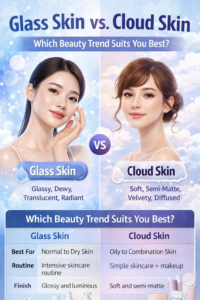
While both trends aim to enhance natural beauty, their approaches and results differ significantly. Glass skin emphasizes maximum hydration and a dewy, reflective finish, whereas cloud skin focuses on softness and a controlled glow.
Glass skin requires an intensive skincare regimen with multiple steps, while cloud skin can be achieved with a simpler routine combined with makeup techniques. The finish of glass skin is glossy and luminous, whereas cloud skin is matte with a hint of radiance.
Another major difference lies in maintenance. Glass skin demands consistency and dedication, while cloud skin is easier to maintain and more adaptable to different skin types and climates. These differences make each trend appealing to different audiences.
Benefits of Glass Skin
One of the biggest advantages of glass skin is its focus on skin health. The routine encourages hydration, nourishment, and proper skincare habits, which can improve overall skin condition over time.
The glowing finish enhances natural beauty and reduces the need for heavy makeup. It gives a youthful and fresh appearance that is highly desirable in modern beauty standards. Additionally, the emphasis on skincare can help address issues like dryness and dullness.
However, achieving glass skin requires patience and consistency. It may not be suitable for individuals with oily or acne-prone skin, as excessive layering of products can sometimes lead to breakouts if not managed properly.
Benefits of Cloud Skin
Cloud skin offers a practical and versatile approach to beauty. Its semi-matte finish helps control excess shine while still maintaining a healthy glow. This makes it particularly suitable for people with combination or oily skin.
The trend is also more time-efficient, as it does not require an elaborate skincare routine. It allows individuals to achieve a polished look with minimal effort, making it ideal for busy lifestyles.
Another advantage is its adaptability. Cloud skin works well in various climates, especially humid conditions where a dewy look may not last long. It provides a balanced aesthetic that suits both casual and professional settings.
Which Skin Type Suits Each Trend?
Choosing between glass skin and cloud skin largely depends on your skin type. Glass skin is best suited for normal to dry skin, as it relies heavily on hydration and moisture retention. Individuals with naturally clear skin may find it easier to achieve this look.
On the other hand, cloud skin is more suitable for oily and combination skin types. Its matte elements help control sebum production while still maintaining a soft glow. It is also a better option for those prone to acne, as it avoids excessive layering of skincare products.
Sensitive skin types can adapt either trend with the right products, but cloud skin may be a safer choice due to its simplicity and reduced risk of irritation.
Lifestyle and Maintenance Considerations
Lifestyle plays a crucial role in determining which trend is more suitable. Glass skin requires a dedicated routine and consistent effort, making it ideal for skincare enthusiasts who enjoy self-care rituals.
Cloud skin, however, is more practical for individuals with busy schedules. It allows for flexibility and quick application, making it easier to maintain daily. The trend aligns well with modern lifestyles that prioritize efficiency without compromising on appearance.
Climate is another important factor. In hot and humid environments, maintaining a glass skin look can be challenging, whereas cloud skin offers better longevity and comfort.
Tools and Products Needed
Achieving glass skin involves using hydrating products such as essences, serums, and moisturizers. Gentle exfoliators and sunscreen are also essential components of the routine. The focus is on skincare rather than makeup.
For cloud skin, the approach is a combination of skincare and makeup. Lightweight foundations, blurring primers, and setting powders are key products. The goal is to create a smooth, diffused finish without completely eliminating natural radiance.
Both trends benefit from high-quality products, but cloud skin generally requires fewer steps and less investment in skincare routines.
Common Misconceptions
One common misconception is that glass skin is only about appearance. In reality, it is deeply rooted in skincare and long-term skin health. Another myth is that cloud skin lacks glow, whereas it actually offers a controlled and subtle radiance.
Some people also believe that these trends are mutually exclusive. However, it is possible to combine elements of both to create a customized look that suits individual preferences and needs.
Understanding these misconceptions can help individuals make informed decisions and avoid unrealistic expectations.
Final Verdict: Which Trend Is Right for You?
Ultimately, the choice between glass skin and cloud skin depends on personal preferences, skin type, and lifestyle. If you enjoy detailed skincare routines and desire a luminous, dewy complexion, glass skin may be the perfect choice.
If you prefer a low-maintenance approach with a soft, natural finish, cloud skin is likely more suitable. It offers practicality and versatility while still enhancing your overall appearance.
Both trends celebrate natural beauty and emphasize healthy skin. Rather than strictly choosing one, individuals can experiment and find a balance that works best for them. The key is to prioritize skin health and confidence, as true beauty comes from feeling comfortable in your own skin.