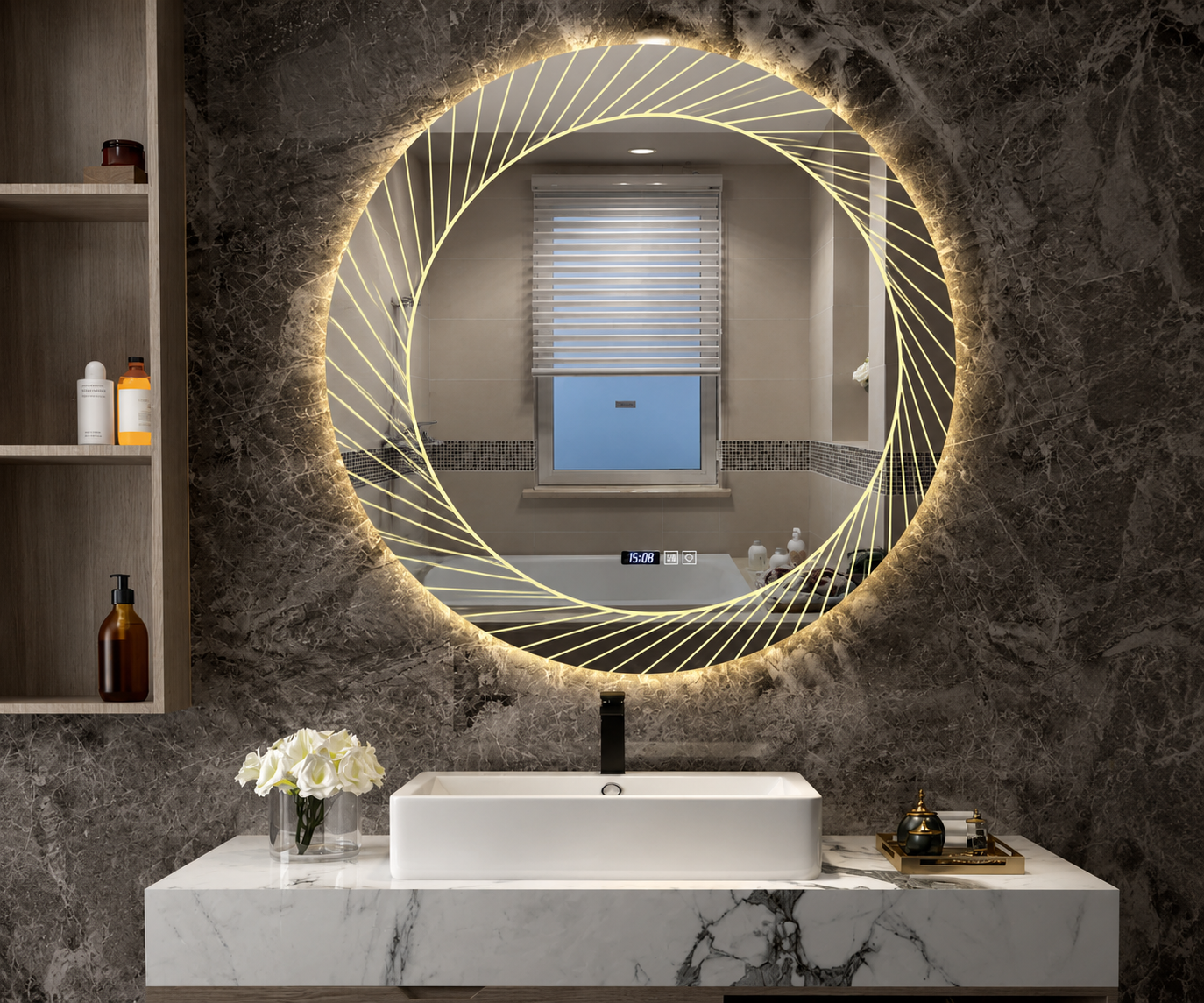
Specifying Custom LED Bathroom Mirrors for Hospitality and Residential Projects
In modern hospitality design, multi-family residential developments, and private-label sanitary ware lines, the bathroom has evolved from a purely functional utility space into a defining architectural feature. At the center of this transformation is the illuminated mirror. Yet for project developers, fit-out contractors, and brand buyers, sourcing custom lighting fixtures at scale involves far more than selecting an attractive silhouette from a catalog.
When outfitting a 300-room resort, a multi-phase apartment complex, or a new retail bath collection, minor oversights in glass substrate, electrical waterproofing, or driver accessibility can lead to premature oxidation, site installation delays, and costly post-handover replacements. To help procurement teams streamline their technical specifications, you can View Shein Mirror OEM LED Bathroom Mirror configurations to see how commercial-grade standards are built from the factory floor up. Below is a comprehensive breakdown of the engineering and supply chain factors that separate reliable commercial mirrors from standard consumer units.
1. Glass Substrate: Copper-Free Silver vs. Aluminum Mirrors
The longevity of any bathroom mirror begins with its reflective backing. Traditional mirrors rely on a copper protective layer that is highly vulnerable to the constant humidity, steam, and harsh chemical cleaners found in hotel guest rooms and residential bathrooms. Over time, moisture penetrates the glass edges, causing dark oxidation spots—commonly known as desilvering.
-
Luxury & Boutique Hospitality: 5mm copper-free silver mirror glass (often termed eco-friendly silver glass) is the industry benchmark. It resists edge corrosion significantly better than conventional glass and prevents subtle optical warping across large floor-to-ceiling or double-vanity spans.
-
Budget-Sensitive Developments: For large-scale, cost-driven multi-family apartments, 4mm aluminum-coated mirror glass with reinforced edge sealing can serve as a practical alternative, provided buyers accept a lower long-term resistance to extreme coastal humidity.
2. Lighting Architecture: CRI, Color Temperature, and IP Ratings
Contractors frequently specify mirrors based solely on wattage or exterior dimensions, overlooking the optical and environmental metrics that define daily user experience.
-
Color Rendering Index (CRI ≥ 90): Low-cost LED strips often sit around CRI 75 to 80, casting an unflattering green or gray tint on human skin. Specifying CRI ≥ 90 ensures natural, accurate color reproduction for grooming and makeup application. High-density strips (at least 120 LEDs per meter) paired with an acrylic diffuser also eliminate visible “hot spots” or individual light dots.
-
Tunable Color Temperature: Commercial buyers increasingly prefer three-color selectable lighting (3000K warm white, 4000K natural daylight, and 6000K cool white) combined with stepless dimming, allowing guests or residents to adjust ambiance throughout the day.
-
Environmental Protection: Every bathroom assembly should carry a minimum IP44 splash-proof rating for the chassis, while the internal LED strips themselves should be encased in IP65 waterproof silicone to withstand persistent condensation.
3. Power Drivers, Regional Certifications, and Wiring Logic
When an illuminated mirror fails two years into a hotel’s operational lifecycle, the culprit is rarely the LED diodes—it is almost always the power driver.
-
Verifiable Market Certifications: Exporting or specifying across global markets requires strict compliance. Confirm that the internal driver holds legitimate UL or ETL listings for North America, CE and RoHS for the European Union, or SAA certification for Australia and New Zealand.
-
Modular Driver Accessibility: Well-engineered commercial mirrors house the driver inside an accessible rear junction box rather than sealing it permanently behind glued panels. If a power supply fails years later, facility maintenance staff can replace the driver in minutes without discarding the entire mirror.
-
Wall-Switch Integration & Memory Function: Unlike residential retail units that use standard wall plugs, commercial projects rely on hardwired connections tied to master room switches. If the mirror features capacitive touch controls on the glass, ensure the factory programs a power-off memory function so the mirror automatically restores its previous brightness and color setting when flipped on from the wall.
4. Managing Multi-Unit Schedules for Residential Developments
Large residential towers, resort villas, and townhouse communities rarely use a single mirror SKU. A single development often requires distinct dimensions, mounting orientations, and control logic across master suites, guest baths, and powder rooms.
Successful developers organize procurement through a structured mirror schedule that links every model code to specific room types, CAD drawings, cable exit positions, and phased delivery dates. For a practical look at how project teams balance feature sets, bill-of-materials costs, and technical drawings on bulk orders, explore this guide on customizing LED mirrors for residential apartment and villa projects. Establishing a locked “golden sample” alongside an approved CAD revision before mass production prevents costly misallocations on the job site.
5. Evaluating Smart Add-Ons: Defoggers, Sensors, and Displays
Modern illuminated mirrors offer an array of integrated features, but procurement teams should evaluate each add-on against maintenance budgets and user habits:
-
Anti-Fog Demister Pads: Rather than simply requesting “anti-fog,” specify the exact heating pad coverage area (typically 50% to 60% of the central viewing zone) and whether it activates alongside the main light or via an independent switch with an auto-shutoff timer.
-
Touch vs. Touchless Controls: Capacitive touch buttons work well in residential units, while infrared hand-wave sensors or radar motion sensors offer hygienic, touch-free operation suited for high-traffic commercial restrooms and upscale hospitality suites.
-
Specialized Upgrades: Features such as integrated Bluetooth speakers, digital time and temperature displays, or embedded waterproof TV screens can elevate flagship suites, though they should be itemized separately to keep baseline room budgets predictable.
6. Transit Packaging and Pre-Shipment Quality Control
Glass is inherently fragile, and international container shipping exposes cargo to severe vibration and handling drops. Reliable OEM factories validate their packaging against ISTA 3A (or 1A) transit drop-test standards using high-density perimeter EPE foam, reinforced corner protectors, and heavy-duty 5-ply corrugated cartons. For bulk commercial deliveries, IPPC-certified fumigated plywood crates protect palletized units against forklift damage at port terminals and construction sites.
Before releasing final balance payments, buyers should always review third-party pre-shipment inspection reports, aging-test logs (typically 24 to 48 hours of continuous illumination), and actual drop-test packaging videos to ensure transit breakage rates remain below industry thresholds.