five items you will never spot at a dermatologist’s house
Dermatologists are skin and hair health experts whose daily work revolves around diagnosing, managing, and preventing conditions that affect the body’s largest organ — the skin. Their approach to skincare and haircare is grounded in science, clinical evidence, and long-term health, not just trends or quick fixes. Because of this, their personal routines and product choices often look very different from what most people use at home.
While some products and tools may seem harmless or even beneficial in marketing campaigns, dermatologists avoid them because they can weaken the skin’s natural barriers or cause long-term harm. Below are five items you’re unlikely to ever find in a dermatologist’s house — and why they choose to steer clear of them.
1. Loofahs — Bacteria Hotspots That Hurt Skin
At first glance, loofahs seem like great exfoliators that make skin smooth, but dermatologists know they can do more harm than good.
Loofahs — especially the synthetic ones used in showers — easily trap moisture, dead skin cells, oils, and microorganisms. Over time, this makes them breeding grounds for bacteria and fungi, increasing the risk of infections and irritation. Additionally, their abrasive texture can scratch and damage the skin’s natural protective barrier, especially for sensitive skin types. Rather than encouraging exfoliation with rough tools, dermatologists favour gentle chemical exfoliants or soft washcloths that won’t compromise skin health.
2. Plastic Combs — Static and Scalp Irritation
It might be surprising, but plastic combs are another item dermatologists avoid in their homes — particularly because of the damage they can cause to hair and scalp.
Plastic combs tend to generate static electricity, which can lead to frizz, breakage, and uneven tension on hair shafts. Their edges are often rigid and can irritate the scalp, especially in individuals with sensitive skin or conditions like seborrheic dermatitis. Dermatologists prefer combs made from wood or carbon material, as these are gentler, reduce static, and help distribute natural scalp oils more evenly through the hair, promoting healthier hair and scalp condition.
3. Nose Strips — Satisfying but Damaging
Nose strips that peel away blackheads are ubiquitous in drugstore aisles and skincare TikToks, but dermatologists rarely use them — and they wouldn’t recommend them either.
While pulling off a nose strip might offer a brief sense of satisfaction, it also removes the skin’s natural oils and tiny layers of living skin cells along with the “gunk.” This can damage the skin barrier, create micro-tears, and lead to redness, irritation, and enlarged pores over time. In many cases, dermatologists advise alternatives like chemical exfoliation with salicylic acid or clay masks that work to loosen trapped sebum without tearing the skin. These gentler methods are safer and more effective for long-term pore care.
4. Makeup Wipes — Convenient but Incomplete
Makeup wipes are marketed as quick and easy solutions for removing cosmetics, but dermatologists tend to avoid them in their daily routines.
The problem is twofold. First, makeup wipes often contain ingredients like alcohol and synthetic fragrances that can dry out and irritate the skin, especially for those with sensitive or compromised barriers. Second, makeup wipes usually do not fully clean the pores — they move makeup particles around rather than removing them completely. This incomplete cleansing can trap dirt and oils deeper in the skin, leading to breakouts and dullness. Dermatologists typically rely on a double-cleansing routine, using an oil-based cleanser first to remove makeup followed by a gentle face wash to cleanse the skin thoroughly.
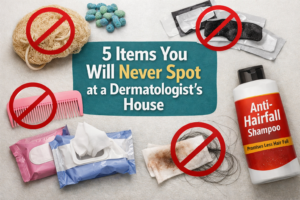
5. Anti-Hairfall Shampoos — Marketing Claims Over Science
You’ve probably seen shelves full of anti-hairfall shampoos promising to reduce hair loss in a matter of days. Dermatologists, however, know these claims are often more marketing than medicine.
Most “anti-hairfall” products focus on surface symptoms rather than the underlying causes of hair loss, which can include genetics, hormonal changes, nutritional deficiencies, stress, and scalp health. Harsh shampoos — especially those with sulfates, silicones, and strong detergents — can strip essential oils, weaken hair shafts, and exacerbate breakage in the long run. Instead of relying on trendy shampoos, dermatologists recommend mild, sulfate-free formulas with supportive ingredients like biotin, caffeine, or peptides, and emphasize addressing lifestyle factors such as diet and stress for more sustainable hair health.
Why Dermatologists Avoid These Items
What all these avoided items have in common is their potential to harm the skin’s protective barrier or worsen underlying conditions, even if they feel satisfying or convenient at first glance. Dermatologists base their personal routines on evidence-based, science-backed practices that prioritize long-term skin integrity rather than immediate results. They focus on products and habits that support the skin — not challenge it.
By avoiding these common but potentially problematic items, dermatologists reduce irritation, lower the risk of infections, and maintain overall skin and scalp health. The alternative approach emphasizes gentle cleansing, barrier protection, scientific ingredients (like chemical exfoliants or sunscreen), and consistent routines over quick fixes or harsh tools.
How You Can Apply These Lessons
Even if you’re not a dermatologist, adopting some of their home habits can significantly benefit your skin and hair health:
-
Replace abrasive tools like loofahs with soft cloths or gentle chemical exfoliants.
-
Choose wide-tooth wooden or carbon combs to reduce static and breakage.
-
Avoid quick-fix extraction products like nose strips that can damage skin.
-
Swap makeup wipes for thorough cleansing routines to protect pores.
-
Be cautious of marketing claims — especially on products like shampoos — and prioritize formulas with evidence-based ingredients.
These small adjustments reflect a broader principle: less can be more in skincare. Protecting the natural skin barrier and avoiding irritating products often leads to healthier, more resilient skin and hair over time.
Conclusion
While skincare trends and viral products abound, dermatologists themselves tend to avoid certain everyday items that can harm the skin or scalp in the long run. From loofahs and plastic combs to nose strips, makeup wipes, and anti-hairfall shampoos, these five items are rarely — if ever — found in a dermatologist’s house because they compromise the very things skin specialists work to protect. Learning why these items are avoided can help inform your own choices, making your routines more science-aligned and less driven by fleeting beauty trends.
By focusing on gentle, evidence-based practices that support the skin’s natural defenses rather than challenge them, you’ll be on the path to stronger, healthier skin — just like the pros.
Read More at : recchiabegue.com