Specifying LED Bathroom Mirrors for Commercial and Residential Projects
Illuminated bathroom mirrors have rapidly evolved from luxury upgrades into standard architectural fixtures across boutique hotels, multi-family apartments, and modern residential renovations. By combining ambient backlighting, task illumination, and built-in defogging into a single wall-mounted unit, they streamline vanity styling and eliminate bulky overhead sconces. However, because LED mirrors merge sensitive electrical components with high-humidity environments, poor specification frequently leads to flickering drivers, uneven light diffusion, or premature glass corrosion. Before finalizing lighting schedules for a build, project teams can review frequent field failure points here: View 10 common led bathroom mirror problems article.
1. Prioritizing Optical Quality: CRI, Color Temperature, and Lighting Geometry
Not all illuminated mirrors deliver usable grooming light. When evaluating photometric performance, the Color Rendering Index (CRI) is the single most critical metric. Low-CRI LED strips distort natural skin tones and cast unflattering green or blue hues across the vanity area. For hospitality and upscale residential projects, specifiers should insist on a minimum CRI of 90+ alongside high-density LED tape (typically 120 diodes per meter or COB strips) to eliminate visible hotspots.
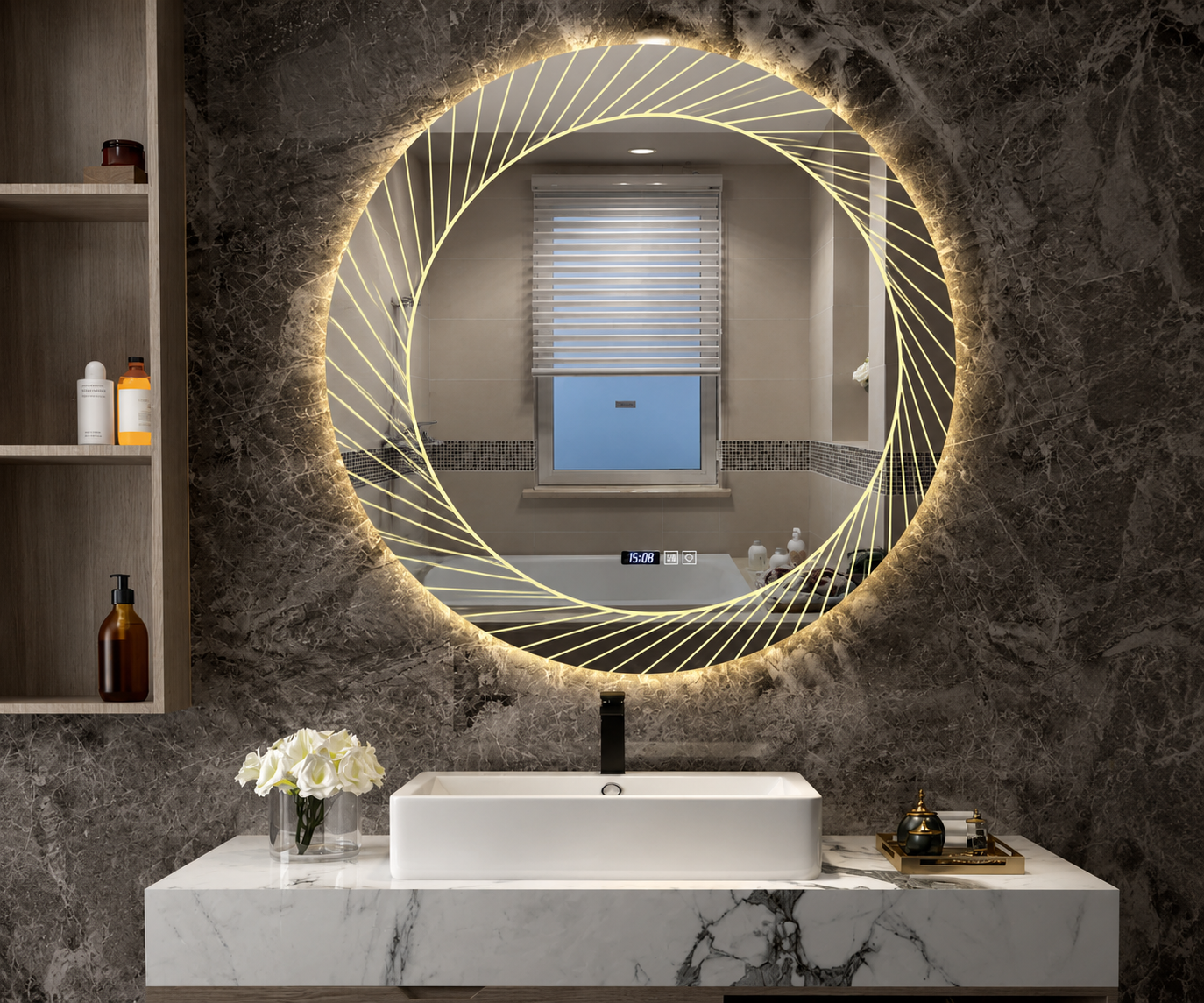
Lighting geometry matters equally. Backlit mirrors project light onto the rear wall, creating a soft architectural halo that works best against light-colored matte tiles, though they offer limited forward brightness for shaving or makeup application. Front-lit designs with frosted acrylic or sandblasted glass borders deliver direct, shadow-free facial illumination. Dual-lit configurations combining both front task lighting and rear ambient glow provide maximum versatility, especially when paired with tunable color temperatures spanning warm 3000K evening ambiance to crisp 5000K daylight.
2. Mirror Glass Chemistry and Anti-Corrosion Protection
One of the most visible failures in budget bathroom mirrors is “black edge” desilvering, a dark, creeping corrosion that begins along exposed perimeter edges. This occurs when steam and ammonia-based glass cleaners react with the copper protective layer used in conventional mirror manufacturing.
Modern commercial specifications eliminate this issue by requiring 5mm copper-free silver mirror glass. Without copper in the reflective coating, the glass demonstrates vastly superior resistance to salt-spray humidity and chemical oxidation. Equally important for public buildings, hotels, and multi-unit housing is applying an explosion-proof safety backing film. If a mirror suffers accidental impact during occupancy or housekeeping, this adhesive film holds fractured glass firmly in place rather than allowing dangerous shards to fall onto the vanity countertop.
3. Ingress Protection, Thermal Management, and Driver Compliance
Behind the glass, electrical engineering dictates how long a fixture survives without flickering or dead zones. Because bathroom mirrors sit inches away from splashing faucets and hot shower steam, internal electronics require verified Ingress Protection (IP) ratings. An IP44 rating serves as the baseline for general vanity zones, while IP65-encapsulated silicone LED strips and waterproof power supplies are strongly recommended for compact wet rooms or coastal properties.
The LED driver is the component most vulnerable to early burnout. Overheating inside a sealed rear housing rapidly degrades low-grade capacitors. Quality builds use anodized aluminum frames or rear chassis profiles that act as passive heat sinks, keeping LED diodes within safe operating temperatures. For commercial electrical sign-off, buyers must also confirm that drivers and touch modules carry regional certifications such as UL, ETL, or CE, and feature modular plug-and-play connectors so maintenance staff can swap a faulty driver in minutes without replacing the entire mirror.
4. Smart Controls, Anti-Fog Pads, and Wall-Switch Compatibility
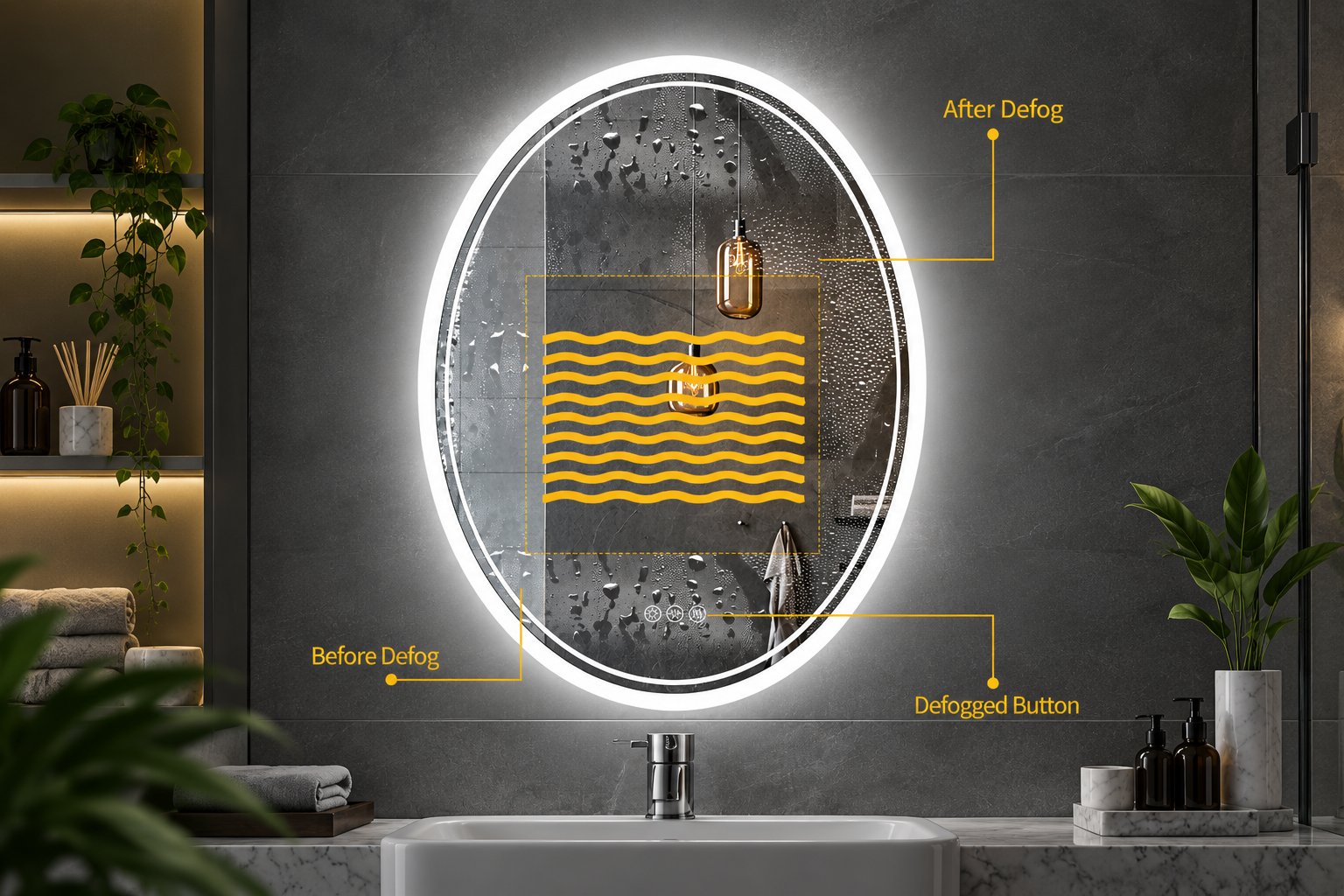
Integrated features elevate user convenience, provided they align with real-world electrical wiring. PET anti-fog heating films bonded to the rear glass gently warm the central viewing area so mirrors stay crystal clear after hot showers. In commercial hotels, pairing defoggers with an automatic 60-minute shutoff timer prevents wasted electricity and unnecessary thermal wear if guests leave the feature running.
Equally critical for multi-unit developments is hardwired wall-switch compatibility with power-off memory. Many inexpensive consumer LED mirrors default to an “off” state or illuminate glowing blue standby icons when controlled by a standard room switch. Guests walking into a dark hotel bathroom expect the mirror to light up instantly when they flip the wall switch, and sleep-sensitive travelers appreciate dimmable touch buttons that can turn off standby indicator LEDs at night.
5. Custom Sizing, Framing, and Installation Readiness
Standard catalog sizes frequently clash with custom architectural millwork, leaving awkward wall margins above double-basin vanities or interfering with side-wall sconces. Matching mirror width closely to the underlying cabinet creates cohesive visual proportions while maximizing usable reflection across wide counters.
Rather than forcing off-the-shelf retail dimensions into bespoke interiors, specifying tailored commercial solutions such as the Dlinxcy Custom LED Mirror series allows architects and contractors to align exact glass sizes, anodized frame finishes, lumen outputs, and rear junction-box cutouts with project drawings. From an installation standpoint, interlocking aluminum Z-bar mounting brackets simplify wall alignment for site crews and support heavy oversized panels securely. Combining custom engineering with reinforced corner guards and drop-tested crate packaging ensures large-format mirrors arrive undamaged and ready for rapid installation.
6. Balancing Upfront Cost with Lifecycle Maintenance
For property developers and procurement managers, evaluating LED mirrors strictly on unit price creates hidden operational liabilities. Replacing a corroded or burned-out mirror in an occupied hotel suite or leased apartment involves electrician call-outs, drywall patching, and temporary room closures that easily exceed the cost of the fixture itself. Investing upfront in copper-free glass, certified waterproof drivers, and serviceable modular internals protects maintenance budgets for years.
Final Specification Takeaways
Selecting the right LED bathroom mirror requires evaluating both lighting aesthetics and moisture-resistant electrical engineering. By specifying high-CRI illumination, copper-free safety-backed glass, IP-rated serviceable drivers, wall-switch memory controls, and tailored sizing, architects and buyers can deliver standout bathroom spaces built for demanding daily use. Treating illuminated mirrors as integrated architectural hardware ensures consistent visual clarity, electrical safety, and reliable performance long after project handover.